


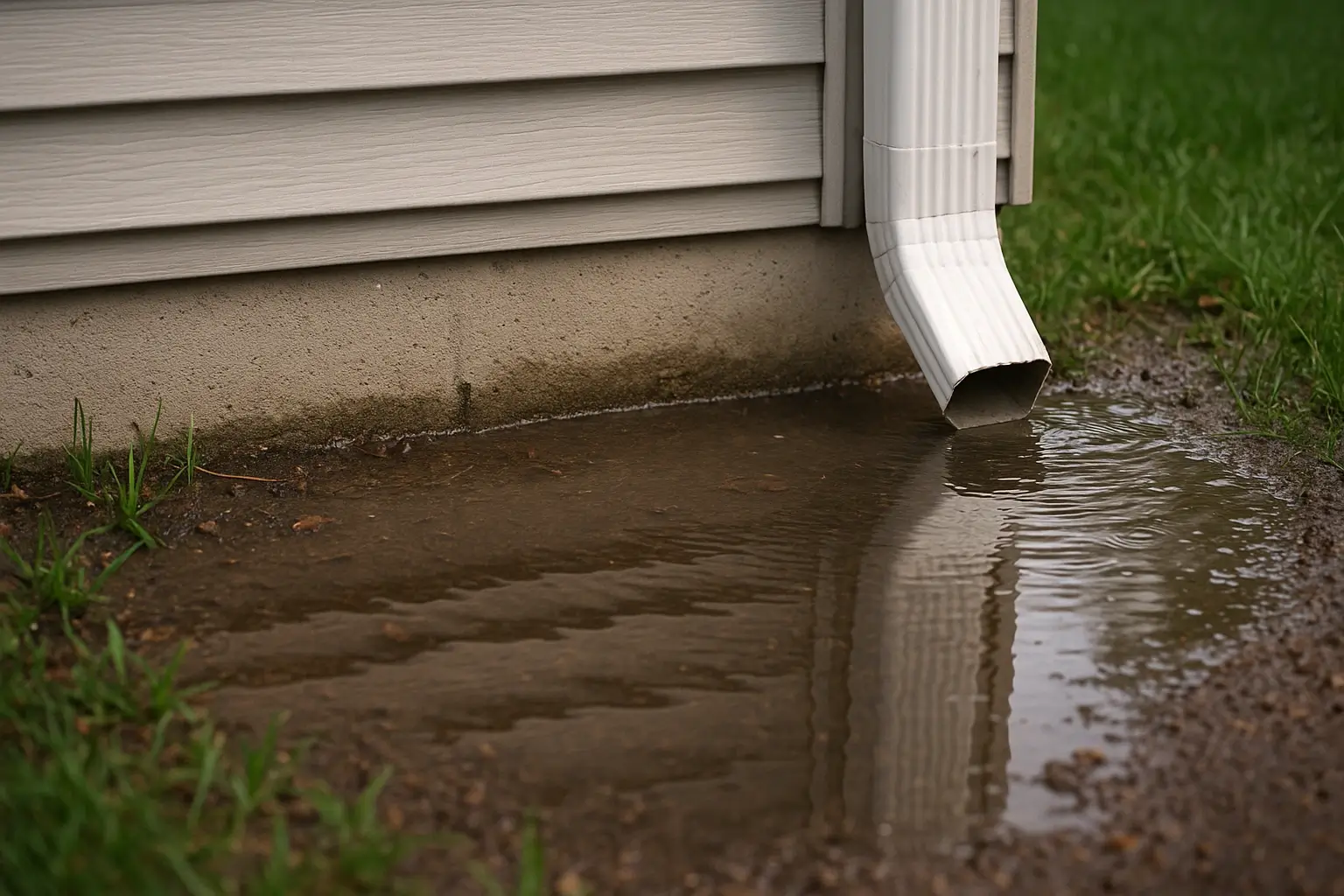
Downspouts don’t usually get much attention—they’re simply supposed to guide water safely away from your home or building. But when they stop working as intended, water can end up exactly where you don’t want it, causing costly damage and headaches you didn’t plan on. Here’s how to spot the early signs of trouble before small issues become big problems.
1. Pooling Water Near Your Foundation
If water gathers in puddles around your home after it rains, your downspouts aren’t guiding it far enough away. Water pooling against foundations can lead to cracks, leaks, and even structural damage if left unchecked. A properly functioning downspout should send water at least four feet from your foundation.
2. Visible Overflow or Backups
If you notice water spilling over from the top or seams of your downspout during rainstorms, it’s likely clogged or blocked. Leaves, twigs, and debris can get stuck easily, causing water to back up into gutters or overflow onto walls and landscaping.
Overflow isn’t just messy—it damages siding, landscaping, and even creates erosion issues.
3. Washed-Out Mulch or Landscaping
Pay attention to changes around your flower beds, garden areas, or lawn edges. If mulch or dirt repeatedly washes away after rainfall, it’s a strong indicator that your downspout drainage is insufficient or misdirected. Properly routed downspouts protect landscaping from damaging runoff.
4. Basement or Crawlspace Moisture
Moisture or musty odors in your basement or crawlspace after storms often signal downspouts aren’t moving water away effectively. Even small amounts of lingering moisture can cause mold growth and structural damage over time.
5. Water Stains on Exterior Walls
Look for vertical streaks or discoloration on walls near your downspouts. These stains mean water is leaking out of joints, or the downspout itself isn’t properly sealed or attached. Unaddressed leaks lead to costly siding repairs and hidden wall damage.
6. Sagging or Detached Downspouts
Downspouts that lean away from your home, sag, or have sections that look disconnected clearly aren’t doing their job. Loose downspouts not only fail to protect your property—they can pull gutters away from your roof, increasing the risk of broader damage.
Quick Solutions to Keep Downspouts Working Properly
- Regularly check and clear debris at least twice a year, especially before Oklahoma’s heavy storm seasons.
- Install extensions or splash blocks to guide water further from your foundation.
- Check for proper attachment and secure loose sections immediately.
- Consider downspout strainers or guards to prevent clogs before they start.
When It’s Time to Call a Professional
If you’re dealing with persistent issues, it may be time for a professional assessment. Experienced gutter professionals can quickly pinpoint and correct drainage problems, ensuring water stays exactly where you want it—away from your home or business.
Final Thoughts
Downspouts that aren’t working properly aren’t just inconvenient; they put your property at real risk. By watching for these signs and responding promptly, you can avoid costly foundation repairs, water damage, and landscaping headaches.
Need help identifying or solving a downspout issue? The team at Expert Gutters can evaluate your drainage, recommend effective solutions, and ensure your downspouts keep protecting your property exactly as they should.