


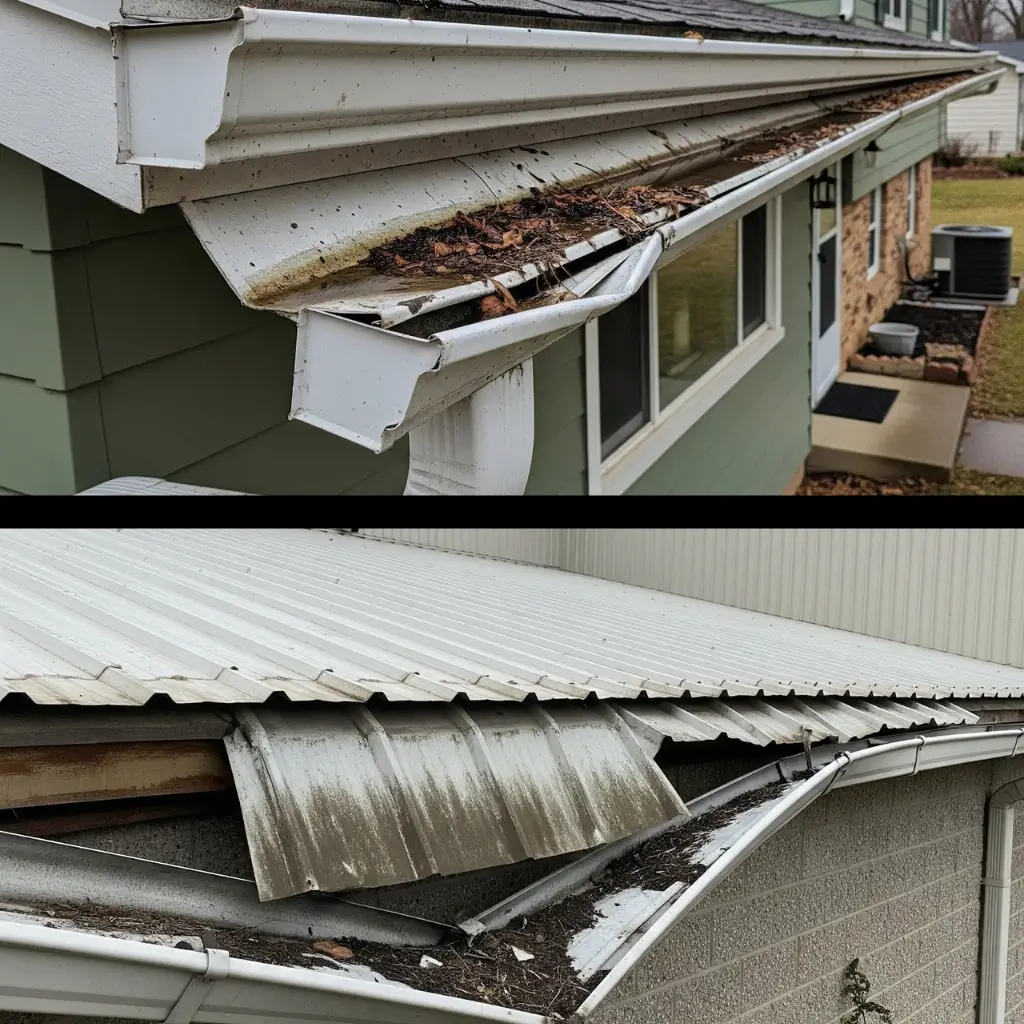
It’s easy to overlook your gutters, especially when they seem to be doing their job. But what happens when they start to sag or pull away from your property? It’s more than just an eyesore; it’s a clear sign of underlying issues that can lead to significant damage to your home or commercial building. Ignoring these signs can result in costly repairs down the line. Let’s explore why a little attention to your gutters now can save you a lot of headaches later.
The Hidden Dangers of Neglected Gutters
When gutters sag or pull away, they stop functioning correctly. Instead of channeling water safely away from your foundation, water can overflow or pool in unintended areas. This seemingly small issue can escalate into a range of serious problems:
Foundation Damage
One of the most critical roles of gutters is to direct rainwater away from your foundation. When gutters are compromised, water can saturate the soil around your foundation. Over time, this can lead to hydrostatic pressure against the foundation walls, causing cracks, leaks in basements or crawl spaces, and even structural instability. For both residential homes and large commercial structures, foundation damage is incredibly expensive to repair and can compromise the entire building’s integrity.
Fascia and Soffit Rot
The fascia is the long, straight board that runs along the lower edge of the roof, directly behind the gutters. Soffits are the undersides of the eaves. When gutters pull away, water can seep behind them, saturating the fascia and soffit. This constant moisture creates an ideal environment for wood rot, mold, and mildew. Not only does this damage the aesthetic appeal of your property, but it also compromises the structural integrity of these essential components, potentially leading to more extensive roof damage.
Landscape Erosion and Garden Damage
Overflowing gutters can dump large volumes of water directly onto your landscaping, washing away mulch, topsoil, and even small plants. For homeowners, this can ruin carefully cultivated gardens and lawns. For commercial properties, it can damage expensive landscaping features, create muddy pathways, and detract from the overall curb appeal, potentially impacting business.
Pest Infestations
Stagnant water that collects in sagging gutters or areas where water overflows can become a breeding ground for mosquitoes and other insects. Furthermore, damp and rotting wood in fascia and soffits can attract pests like termites, carpenter ants, and rodents, who seek out soft, moist wood for nesting and foraging. These pests can then find their way into your attic or walls, creating a much larger and more difficult problem to resolve.
Ice Dam Formation (in colder climates)
In regions with freezing temperatures, sagging gutters can contribute to ice dam formation. When heat escapes from your home’s roof, it melts snow, which then flows down to the colder eaves and gutters. If the gutters are clogged or sagging, the water can refreeze, forming ice dams. These dams prevent further meltwater from draining, causing it to back up under your shingles and into your attic or walls, leading to significant water damage, insulation issues, and potential mold growth. This is a concern for both residential and commercial roofs.
Why Do Gutters Sag or Pull Away?
Several factors can contribute to gutters sagging or pulling away:
- Clogs: Debris like leaves, twigs, and shingle grit can accumulate in gutters, making them heavy, especially when saturated with water.
- Improper Installation: If gutters weren’t installed with enough hangers or the hangers weren’t properly secured, they can weaken over time.
- Damaged Hangers or Fasteners: The brackets or screws that hold the gutters to your fascia can corrode, break, or pull out due to age, weather, or excessive weight.
- Overflowing Water: Persistent overflowing due to clogs or insufficient gutter capacity can put continuous strain on the gutter system.
- Poor Drainage Slope: Gutters need a slight slope to ensure water flows efficiently. If the slope is incorrect, water can pool, adding weight and stress.
Protecting Your Property: What to Do
The good news is that addressing sagging or pulling gutters proactively can prevent these serious issues.
- Regular Cleaning: The simplest and most effective step is to keep your gutters free of debris. Regular cleaning, especially in fall and spring, prevents clogs and reduces excess weight.
- Inspection and Maintenance: Periodically check your gutters for signs of sag, rust, loose fasteners, or damage. For commercial properties, scheduled professional inspections are highly recommended.
- Repair or Replace Damaged Sections: If you notice a section pulling away or a hanger has come loose, addressing it promptly can prevent the problem from spreading.
- Consider Gutter Guards: For both homes and commercial buildings, installing gutter guards can significantly reduce the amount of debris that enters your gutters, minimizing clogs and maintenance needs.
- Professional Assessment: If you’re unsure about the extent of the damage or the best course of action, consult with a gutter professional. They can assess the underlying cause, recommend appropriate repairs, and ensure your gutter system is functioning optimally to protect your property.
Ignoring a sagging or pulling gutter is akin to ignoring a slow leak in your roof. It might not seem like a big deal at first, but left unaddressed, it can lead to substantial and expensive damage to your most valuable asset – your property. A small investment in gutter maintenance and timely repairs can save you from much larger headaches and expenses down the road.
Have questions? Need help? Call Expert Gutters.