


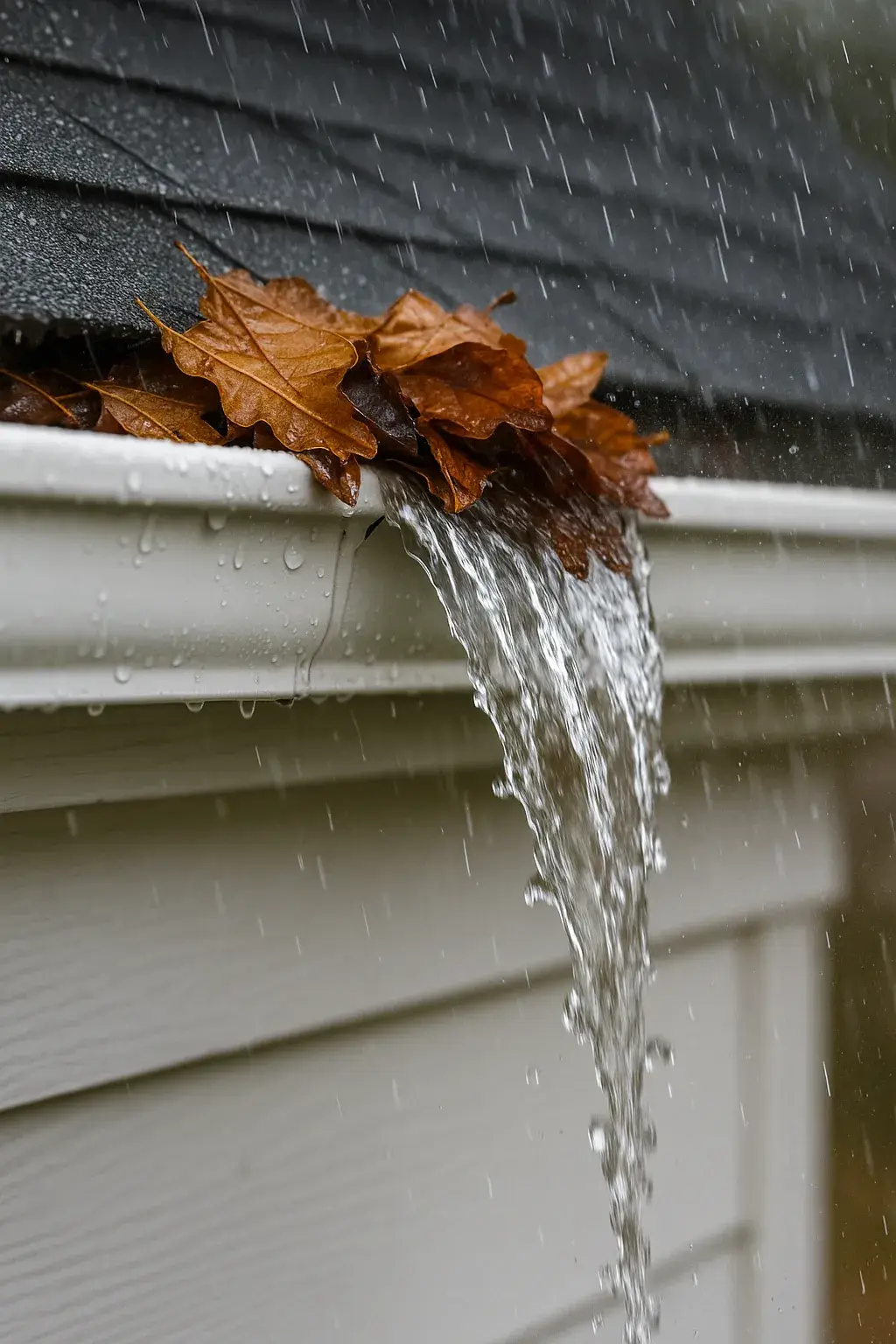
A sudden sheet of water pouring over the gutter edge isn’t just messy—it’s a sign that your drainage system is struggling to keep up with Oklahoma’s intense downpours. Here are the most common culprits and what you can do to stop the spill before it damages siding, landscaping, or foundations.
1. Clogs at the Top
Leaves, twigs, and red-clay sediment settle inside the trough and act like a dam. Overflow follows the path of least resistance—usually straight down the wall.
Fix: Schedule a cleanout each spring and fall or install mesh guards to block debris.
2. Downspouts Too Small—or Too Few
Even clear gutters will back up if a single 2 × 3-inch downspout tries to drain a long run. Commercial roofs with large surface areas need multiple 3 × 4-inch outlets (or larger).
Fix: Add additional downspouts or upsize the outlets to improve flow.
3. Improper Pitch
Water should slope ¼ inch every 10 feet toward the outlet. A sagging section holds water, collects debris, and spills over in minutes.
Fix: Re-hang the low spots or install new hangers to restore the correct angle.
4. Undersized Gutters
A 5-inch profile can overflow on steep roofs or where two valleys empty into one run. Six-inch gutters move roughly 40 percent more water—often the difference between steady flow and a waterfall.
Fix: Upgrade problem sections to 6-inch seamless aluminum or steel.
5. Blocked Underground Drainage
For homes and storefronts that send water underground, a clog where the downspout meets the drain pipe forces water to back up and over the rim.
Fix: Flush or snake the line and add a clean-out for easier maintenance.
6. Ice Dams in Winter
Melting snow refreezes at the gutter edge, trapping meltwater behind it. When temperatures rise, that water has nowhere to go except over the lip.
Fix: Keep attics properly insulated and consider heat cables in chronic trouble spots.
7. Heavy Roof Valleys
Two steep planes converge, concentrating rainwater faster than the gutter can clear it—especially during a spring cloudburst.
Fix: Install a splash guard at the valley outlet or run an additional downspout nearby.
Quick Inspection Routine
- Watch the next rain. Note where water spills first.
- Check for standing water in the trough once the storm passes.
- Look for washed-out mulch or soil at ground level.
- Shine a flashlight down each downspout to confirm it’s clear.
Preventive Tips for Oklahoma Properties
- Trim back branches before fall leaf drop.
- Rinse gutters mid-summer to remove shingle grit after hailstorms.
- Schedule a professional pitch check every three to five years—sooner for flat commercial roofs.
Final Word
Overflow is a symptom, not the problem itself. Identifying the cause—whether it’s a simple clog or an undersized system—saves you from bigger repairs down the road.
Or simply call Expert Gutters—we’ll pinpoint the issue on your home or commercial building, recommend the right fix, and handle every detail from cleanout to new installation.